YTMDP-1200/3+3+10 Porcelain Tile 45° Bevel Edge Polishing Machine
Porcelain tile 45° bevel edge polishing machine with 3 squaring, 3 chamfering and 10 polishing heads. Processes 80–1200 mm tiles at 4–8 m/min.
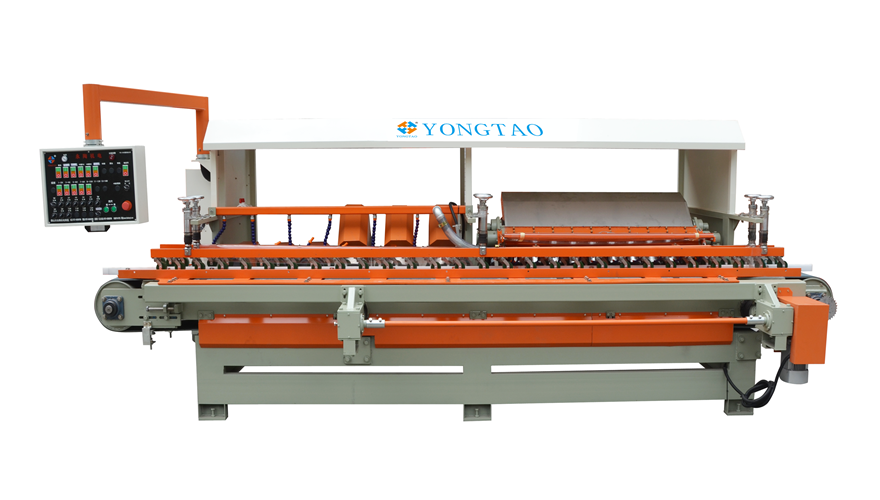
Product introduction
The YTMDP-1200/3+3+10 is an industrial porcelain tile 45 degree bevel edge polishing machine designed for continuous, single-edge processing. It combines three squaring heads, three fixed 45° chamfering heads and ten polishing heads in one production sequence. Each tile edge is calibrated, formed into a controlled bevel and progressively polished during conveyor feeding.
The machine processes tiles from 80 to 1200 mm wide and 6 to 20 mm thick. Its adjustable working speed of 4–8 m/min supports batch processing while allowing the operator to coordinate feed speed with tile hardness, incoming edge condition, bevel depth and the required finish.
What Does the YTMDP-1200/3+3+10 Machine Do?
The machine performs three essential edge-finishing stages: squaring, 45° chamfering and bevel polishing. It is intended for porcelain and ceramic tiles that require a straight reference edge and a consistent polished 45 degree tile edge.
Unlike equipment used only for rough edge removal, this configuration prepares and finishes the bevel in a continuous process. The three squaring heads establish the edge geometry, the three chamfering heads form the 45° bevel, and the ten polishing heads progressively refine the chamfered surface.
The result depends on the tile material, initial edge condition, wheel specification, abrasive sequence, feed speed and required surface quality. A processing test is recommended before confirming settings for a new material or production specification.

3+3+10 Edge Processing Sequence
1. Three-Head Edge Squaring
The first three heads grind and calibrate the selected tile edge. This stage removes dimensional irregularities and establishes a straight reference surface before the bevel is formed.
Correct squaring is important because an uneven incoming edge can affect bevel width and polishing consistency. In this processing stage, the machine functions as a tile edge squaring machine within the complete production sequence.
2. Three-Head 45° Chamfering
After squaring, the tile passes through three chamfering stations equipped with 200 mm wheels. These heads progressively remove material and form the required 45° edge.
Using three dedicated chamfering heads distributes the material-removal process across several stations. The settings should be matched to tile hardness, thickness, incoming edge condition and the required bevel depth.
This section gives the machine the function of a tile edge grinding and chamfering machine while preparing a stable surface for the following polishing stages.
3. Ten-Head Progressive Bevel Polishing
Ten polishing heads progressively refine the chamfered surface. The polishing sequence removes grinding marks left by the previous stages and produces a smoother, more consistent bevel finish.
The ten-head polishing section uses 95 mm wheels to refine the chamfered surface through progressive abrasive stages. Abrasive selection and polishing order should be determined according to porcelain or ceramic tile composition, surface coating and the required final appearance.
4. Continuous Conveyor Feeding
A 300 mm conveyor belt carries the tile through the squaring, chamfering and polishing stations at a controlled speed. The working speed is adjustable from 4 to 8 m/min.
This continuous-feed design reduces manual transfer between separate operations and supports repeatable 45° edge polishing for compatible tile specifications.
Main Processing Advantages
Integrates edge squaring, 45° chamfering and bevel polishing in one continuous sequence.
Uses a 3+3+10 head configuration for dedicated edge preparation and progressive polishing.
Processes porcelain and ceramic tiles from 80 to 1200 mm wide.
Supports tile thicknesses from 6 to 20 mm.
Provides an adjustable working speed of 4–8 m/min.
Processes one selected tile edge during each pass.
Reduces repeated handling between individual grinding, chamfering and polishing operations.
Supports continuous batch production with consistent machine settings.
Allows wheel and abrasive selection to be matched to the tile material and required finish.
The YTMDP-1200/3+3+10 combines tile squaring, chamfering and polishing instead of performing only one isolated edge-finishing operation.
For continuous production, the machine can be connected to a three-blade CNC tile cutting machine and transition conveyors, combining tile cutting, edge squaring, 45° chamfering and bevel polishing in one production line.
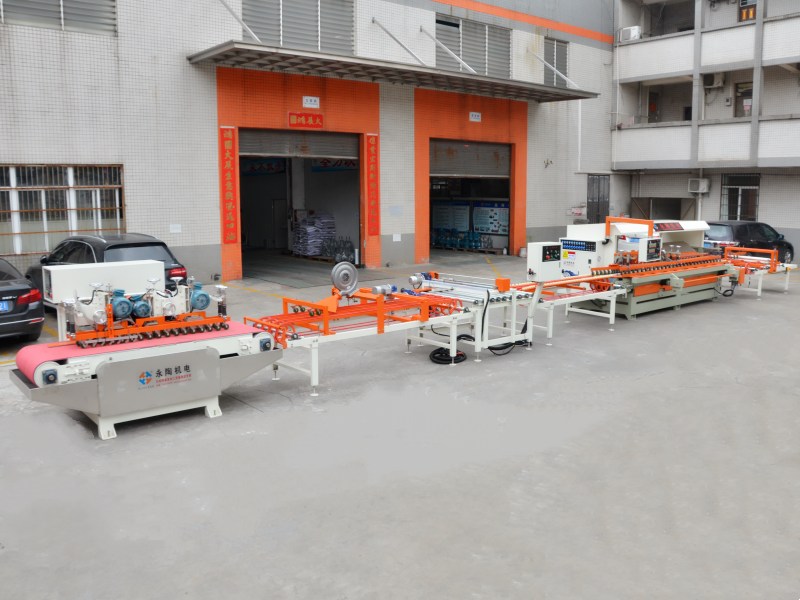
Integrated production line combining three-blade CNC tile cutting with continuous edge squaring, 45° chamfering and bevel polishing.
Suitable Tile Materials
The machine is primarily designed for:
Porcelain tiles
Ceramic tiles
Glazed ceramic tiles
Polished ceramic tiles
Material hardness, body composition, glaze condition and tile thickness can affect the recommended wheel specification, polishing abrasives and working speed. New materials should be tested before continuous batch production.
For porcelain processing, the machine provides automatic 45° bevel preparation and polishing. For ceramic products, suitable wheels and abrasives can be selected for edge grinding, chamfering and polishing.
Special tile materials or coatings should not be placed into batch production until sample processing confirms edge quality, bevel consistency and abrasive compatibility.
Typical Production Applications
The YTMDP-1200/3+3+10 is suitable for factories and processing workshops producing tiles that require a polished 45° bevel edge. Typical applications include:
Porcelain tiles prepared for 45° corner assembly
Ceramic wall and floor tile edge finishing
Tiles requiring calibrated edges before chamfering
Decorative tile components with polished bevel edges
Batch production of consistent single-edge bevels
Tile components used for external corner details
Continuous processing of repeated tile specifications
The machine grinds and polishes the bevel rather than simply forming a rough angled edge. This makes it suitable where the appearance and consistency of the finished bevel are important.
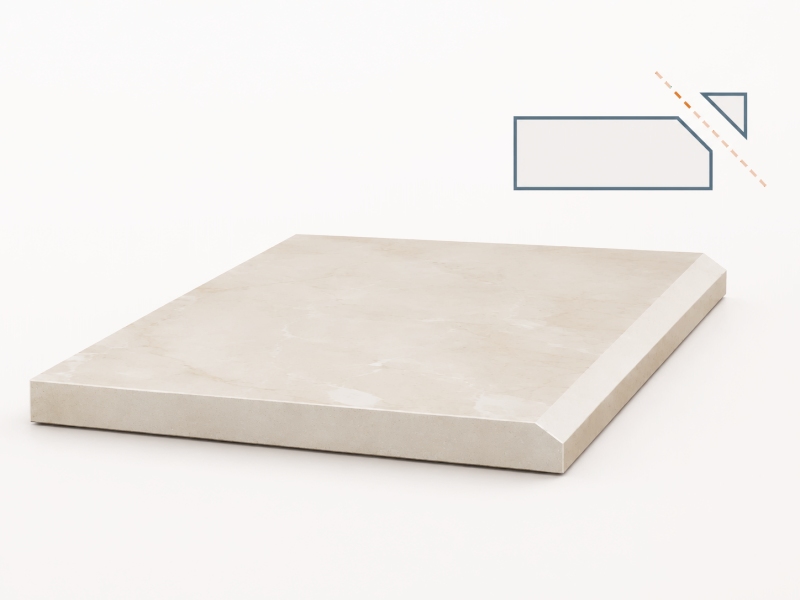
Polished 45° bevel edge produced on a porcelain tile by the YTMDP-1200/3+3+10.
Technical Specifications
Actual output and finishing results may vary according to tile material, incoming edge quality, bevel depth, wheel condition, abrasive sequence, feed speed and operator settings.
Why Use a 3+3+10 Configuration?
The 3+3+10 configuration separates the process into three clearly defined stages. Three squaring heads prepare the reference edge, three chamfering heads form the bevel, and ten polishing heads refine the finished surface.
This arrangement is suitable for production where edge preparation is important before polishing. It also makes the processing sequence easier to evaluate because the operator can inspect the result of each functional stage and adjust the corresponding wheels, abrasives or feed speed.
The machine should be selected according to the actual tile specification and required bevel finish, rather than only by the total number of heads.
Single-Edge Processing
The YTMDP-1200/3+3+10 processes one selected 45° bevel edge during each pass. If more than one edge requires the same finish, the tile must be reoriented and fed through the machine again.
This configuration is suitable for repeated batch production where the same edge specification is processed continuously. Before production begins, operators should confirm the feeding direction, reference surface, bevel depth and required finished orientation.
Factors That Affect the Finished Edge
Tile Material
Porcelain and ceramic tiles differ in hardness, density and surface coating. These differences influence wheel selection, abrasive sequence and working speed.
Incoming Edge Condition
A chipped, uneven or dimensionally inconsistent edge may require more squaring before a uniform bevel can be formed.
Bevel Depth
A deeper bevel removes more material and may require adjusted chamfering settings or a lower feed speed.
Polishing Requirements
The required surface finish determines the polishing sequence. A functional bevel and a visually refined bevel may require different abrasives and machine settings.
Wheel and Abrasive Condition
Worn or unsuitable wheels can reduce bevel accuracy and surface consistency. Consumables should be inspected and replaced according to processing performance.
Feed Speed
The listed working speed is 4–8 m/min, but the appropriate production setting depends on the material, bevel depth and required finish. Maximum speed should not be used as the only measure of production quality.
Information Required Before Machine Selection
To confirm whether this 1200mm porcelain tile bevel edge polishing machine matches your production requirements, provide the following information:
Tile material
Minimum and maximum tile dimensions
Tile thickness
Incoming edge condition
Required 45° bevel depth
Required surface finish
Number of edges to be processed
Expected production capacity
Available factory space
Local electrical requirements
Available compressed air and cooling-water supply
Providing tile samples or clear edge drawings helps confirm wheel selection, abrasive configuration and processing settings before production.
For other head configurations, compare Yongtao automatic tile bevel edge polishing machine models.
Frequently Asked Questions
What does 3+3+10 mean?
The configuration includes three squaring heads, three 45° chamfering heads and ten polishing heads. The three groups perform edge calibration, bevel formation and progressive polishing in sequence.
Can the machine complete squaring, chamfering and polishing in one pass?
Yes. One selected tile edge passes continuously through the squaring, chamfering and polishing stations. No manual transfer is required between these three processing stages.
What materials can the machine process?
The machine is primarily designed for porcelain and ceramic tiles. Glazed and polished ceramic tiles may also be processed with suitable wheels, abrasives and machine settings. Special materials should be tested before batch production.
What tile sizes can it process?
The listed processing width is 80–1200 mm, and the supported tile thickness is 6–20 mm. The tile must also be suitable for stable conveyor feeding and correct edge positioning.
What is the production speed?
The adjustable working speed is 4–8 m/min. Actual production output depends on tile dimensions, material hardness, bevel depth, required finish and the number of edges processed on each tile.
Does it process both sides of a tile simultaneously?
No. This is a single-edge configuration that processes one selected edge during each pass. The tile must be reoriented and fed again when additional edges require the same finish.
Is it suitable only for rough 45° chamfering?
No. The machine includes ten polishing heads after the squaring and chamfering stages. These heads progressively refine the bevel surface and remove marks left by the preceding grinding process.
What utilities are required?
The listed requirements include approximately 40 L/min of compressed air and 300 L/min of cooling water. The total installed power is 26.05 kW. Electrical specifications should be confirmed before manufacturing and installation.
How should wheels and abrasives be selected?
Selection depends on tile hardness, body composition, surface coating, bevel depth and required finish. Trial processing with the customer’s material is recommended before confirming a production abrasive sequence.
How much does the machine cost?
The porcelain tile bevel edge polishing machine price depends on the required electrical specification, wheel and abrasive configuration, optional components, delivery requirements and installation arrangements. Provide tile samples, dimensions, required bevel depth and expected output to receive an appropriate technical proposal and quotation.
Request a Technical Recommendation
Yongtao manufactures the YTMDP-1200/3+3+10 for continuous 45° edge preparation and polishing of porcelain and ceramic tiles. Customers looking for a porcelain tile 45 degree bevel polishing machine manufacturer should provide their material, size range, thickness, bevel requirement and production target.
A clear production specification allows the correct wheel configuration, abrasive sequence, working speed and utility requirements to be evaluated before quotation.
Machine specifications
| Specification | Value |
|---|---|
| Model | YTMDP-1200/3+3+10 |
| Conveyor belt width | 300 mm |
| Number of squaring heads | 3 |
| Squaring wheel diameter | 200 mm |
| Number of 45° chamfering heads | 3 |
| Chamfering wheel diameter | 200 mm |
| Chamfering motor power | 2.2 kW |
| Number of polishing heads | 10 |
| Polishing wheel diameter | 95 mm |
| Polishing motor power | 1.5 kW |
| Processing width | 80–1200 mm |
| Tile thickness | 6–20 mm |
| Working speed | 4–8 m/min |
| Conveyor motor power | 2.2 kW |
| Baffle motor power | 0.75 kW |
| Total power | 26.05 kW |
| Air consumption | 40 L/min |
| Water consumption | 300 L/min |
| Machine dimensions | 4.8 × 2.0 × 1.8 m |
| Machine weight | Approximately 4000 kg |
Technical data reflects the legacy product record. Confirm voltage, options and final configuration with the approved quotation.
Bring the material. We’ll plan the process.
Send your material, maximum dimensions and production target. We will help you confirm the suitable machine configuration.